
There are some experiences in Highlands that stay with you long after the drive home. Spotting a peregrine falcon above Whiteside Mountain is one of them. With its dramatic cliffs, cool mountain air, and rare Blue Ridge escarpment habitat, Highlands offers an extraordinary place to witness these magnificent birds in the wild and to feel, for a moment, just how alive these mountains are.
A Spectacular Sight at Whiteside Mountain
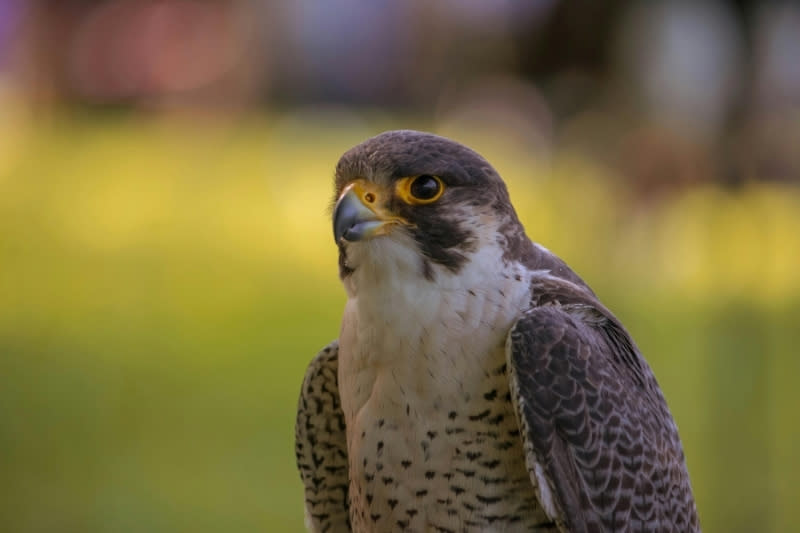
If you’ve hiked the trail along the cliffs of Whiteside Mountain, hopefully you’ve spotted Peregrine Falcons swirling and soaring overhead. While majestic by many measures, perhaps their most impressive feat is the stoop: a steep, breathtaking dive in pursuit of prey that can approach 200 miles an hour, making the Peregrine Falcon the fastest animal on earth.
Why Falcons Thrive Here
Highlands and Cashiers sit within the Blue Ridge Escarpment of the Southern Appalachian Mountains, commonly called the Blue Wall. Here, erosion-resistant metamorphic mountains create dramatic elevation changes over very short distances, among the steepest in the United States. That striking terrain helps cool passing clouds quickly, producing generous rainfall and supporting extraordinary biodiversity.
These ancient mountains also provide one of the largest concentrations of exposed rock faces and cliffs in the eastern United States, creating prime Peregrine Falcon habitat.
A Remarkable Return
It almost wasn’t so. The use of pesticides such as DDT in the mid-20th century nearly wiped out Peregrine Falcons, which were listed as an endangered species in 1970, according to the U.S. Forest Service. Thankfully, after those chemicals were banned, the birds responded well to breeding efforts. In 1984, the N.C. Wildlife Commission began reintroducing Peregrine Falcons into the wild and rebuilding populations across the state. By 1999, they had recovered enough to be removed from the U.S. Endangered Species List.
Protecting Nesting Sites
Human activity remains one of the Peregrine’s major threats. Fortunately, partnerships among public and private organizations in western North Carolina are helping reduce that risk. Members of the Carolina Climbers Coalition identify and monitor nesting sites, known as eyries, and coordinate with biologists from the N.C. Wildlife Resources Commission. The U.S. Forest Service uses that information when deciding whether to close identified sites in the Nantahala and Pisgah forests. Organizations such as the Highlands-Cashiers Land Trust also help protect surrounding land that supports the Peregrine’s food sources.
A Success Story Still in Motion
The good news is that these efforts are working. According to the U.S. Forest Service, in 2021 across western North Carolina, 15 sites were occupied by Peregrine Falcon pairs, and seven successfully reproduced, with a total of 12 offspring.
See Them with Care
If you come across signage indicating a closure due to nearby nesting Peregrine Falcons, please respect it. And while you’re out exploring, take a moment to look skyward for these magnificent birds in flight and appreciate that they once again call Western North Carolina home.