
A field guide to the native trees of Highlands, the colors they wear each fall, and which ones turn first.
At 4,118 feet, Highlands sits where three forests meet, and more than 65 native tree species share the plateau. That variety is why October here looks the way it does: dogwood and sourwood in scarlet, tulip poplar and hickory in gold, and the oaks holding out in russet and bronze until November.
On the Plateau Now
Updated September 29, 2026
The canopy around town is still mostly green. Along the roadsides and ridges, the early trees have started right on schedule.
Turning now: flowering dogwood, sourwood, blackgum, sumac and yellow buckeye.
Just starting: red maple and birch, above 4,500 feet on Whiteside Mountain.
Still green: tulip poplar, hickories, sassafras, sugar maple and the oaks.
Expected peak: mid to late October.
This year may run a little late. September set heat records across North Carolina, and Macon County has been in severe drought. Warm Septembers delay maple color, so Howard Neufeld, the retired Appalachian State biologist known as the Fall Color Guy, expects a season about a week later than usual that lasts longer. Cool October nights are what the reds need.
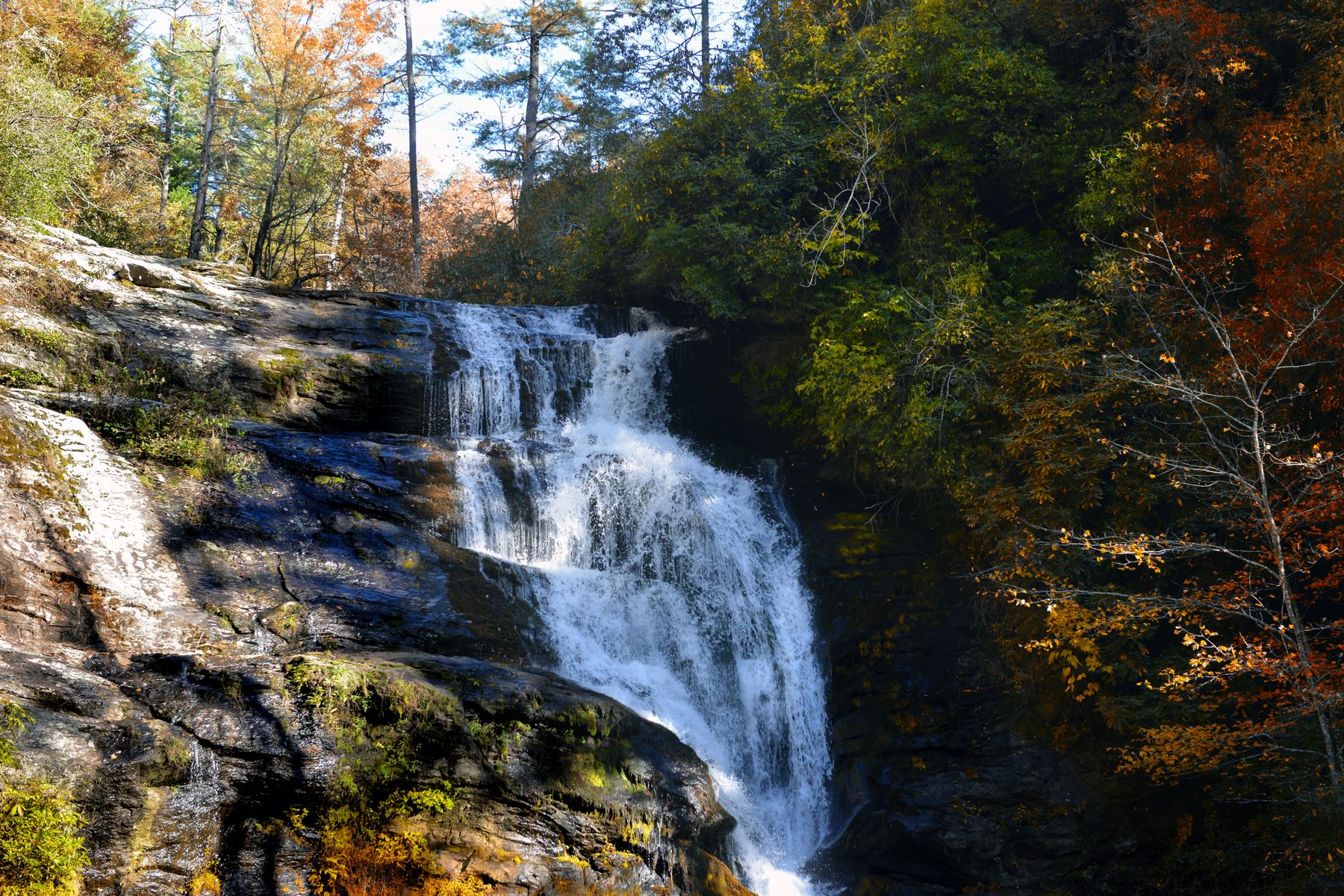
A Plateau of Many Forests
Highlands sits high on the Blue Ridge Escarpment and averages 80 to 100 inches of rain a year. The forest here is richer than most visitors expect: the Highlands Biological Station counts more than 65 native tree species on and around the plateau.
At this elevation, three forest types grow side by side. Sheltered coves hold tulip poplar, sweet birch, yellow buckeye and Fraser magnolia. Dry ridges belong to the oaks and hickories. Higher up, on Whiteside Mountain and the cooler north faces, you'll find yellow birch, sugar maple and American beech. Through all of it, hemlock, white pine, rhododendron and mountain laurel stay green, a dark backdrop for every red and gold.
Why the Leaves Change
All summer, green chlorophyll hides the yellow and orange pigments already in each leaf. As nights lengthen and cool, trees stop making chlorophyll, and the golds come through.
Reds are different. Trees such as red maple, sourwood and blackgum make new red pigment each fall, and they make the most of it after sunny days and cool, frost-free nights.
Dogwood takes its cue from shorter days. Maples wait on cooler temperatures.
Who Turns First
Timing on the plateau depends on two things: the species and the elevation. Trees on the highest ridges color first, then trees in town, then those in lower country like Horse Cove and the Cullasaja Gorge.
September: the early reds. Flowering dogwood, sourwood and blackgum lead, followed by sumacs, yellow buckeye and the occasional early red maple, often in wet, low spots. Native Virginia creeper reddens on fences and trunks.
Early October: the golden stretch. Birches, tulip poplar, sassafras, hickories, striped maple and most red maples come into color. In a typical year, Highlands peaks from about October 11 to 20.
Late October: maples, then the oaks. Sugar maples reach full color, then scarlet oak, northern red, white and chestnut oak. Beech turns bronze. The oaks hold their leaves longest, often into November.
The Trees and Their Colors
Twenty-one natives worth knowing by their fall color, grouped the way you'll see them from an overlook.
Crimson and Scarlet
The reds arrive first and leave last: dogwood in late summer, the oaks in November.
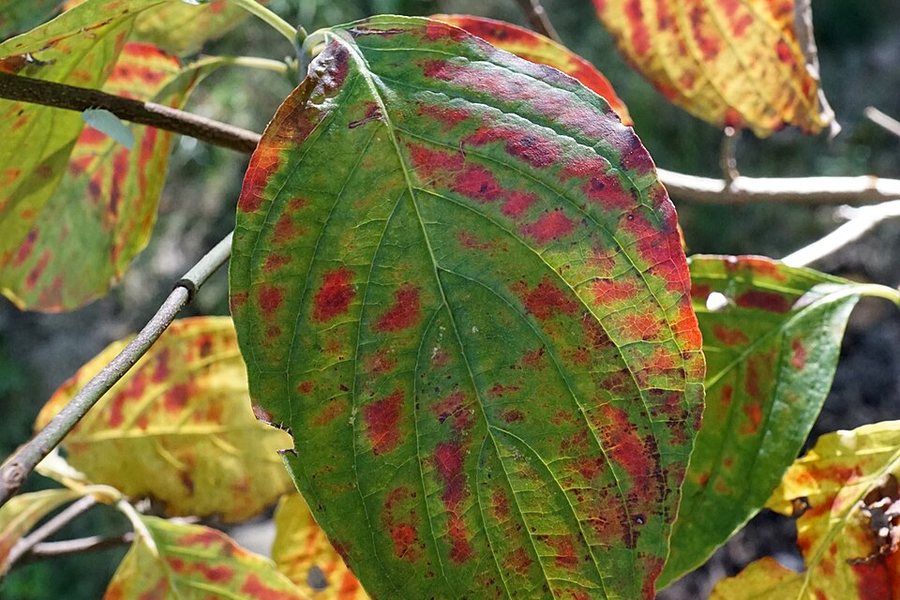
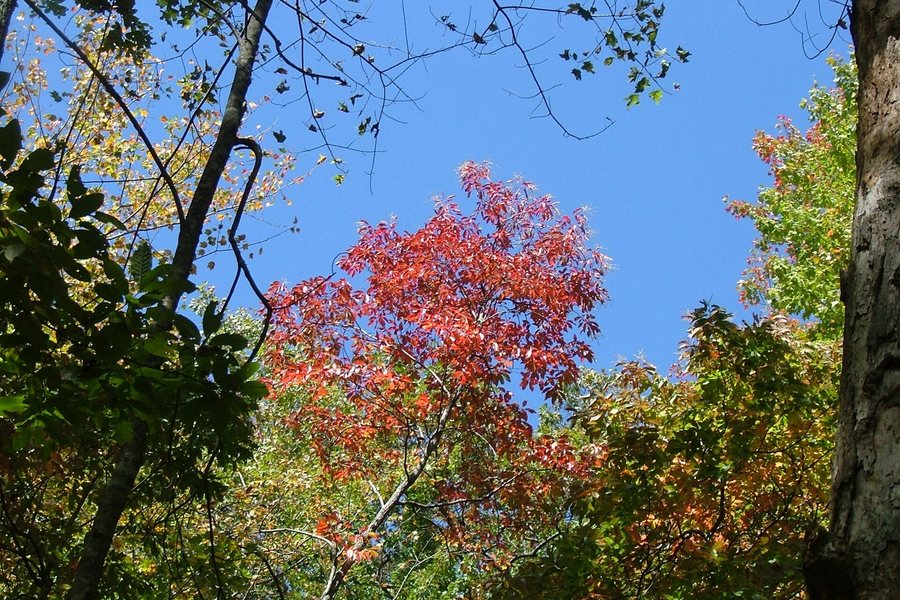
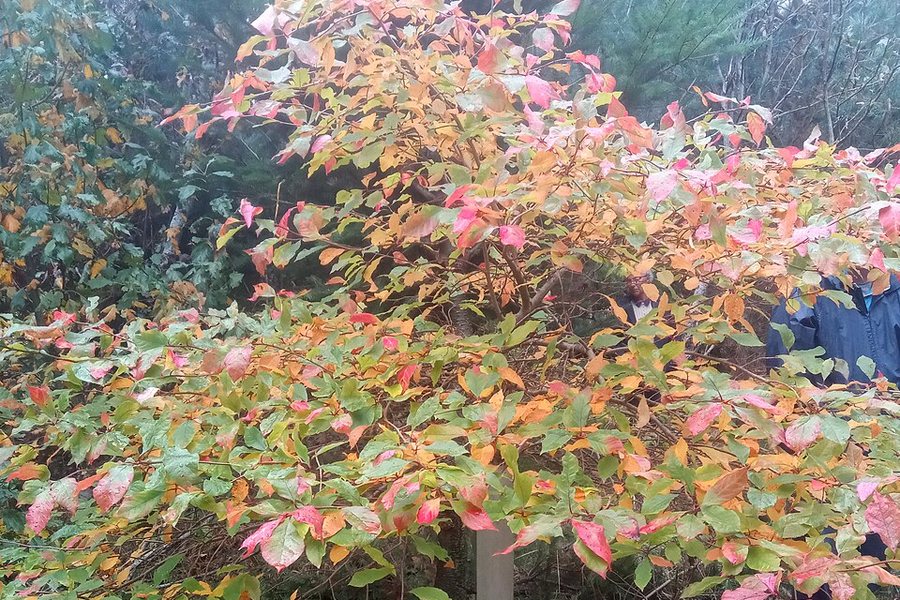
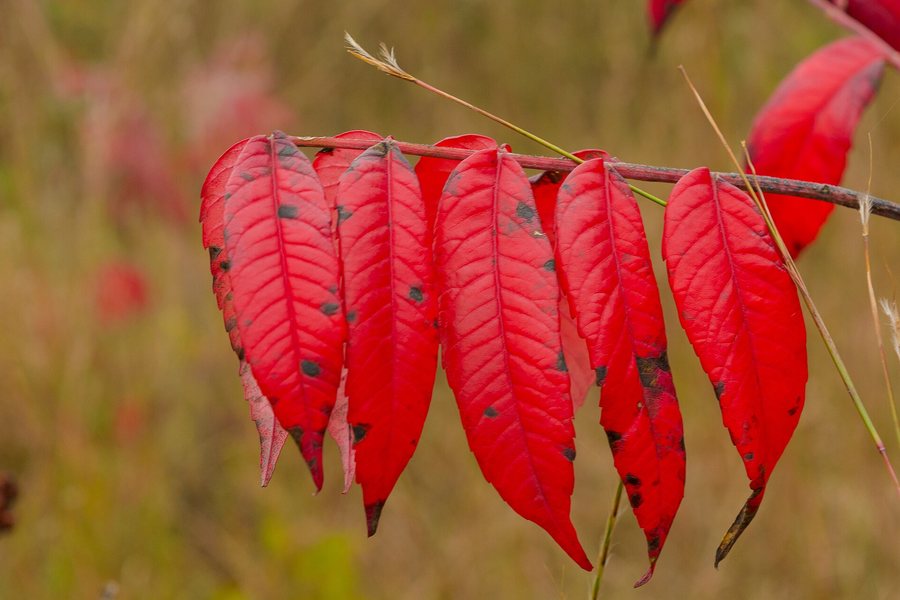
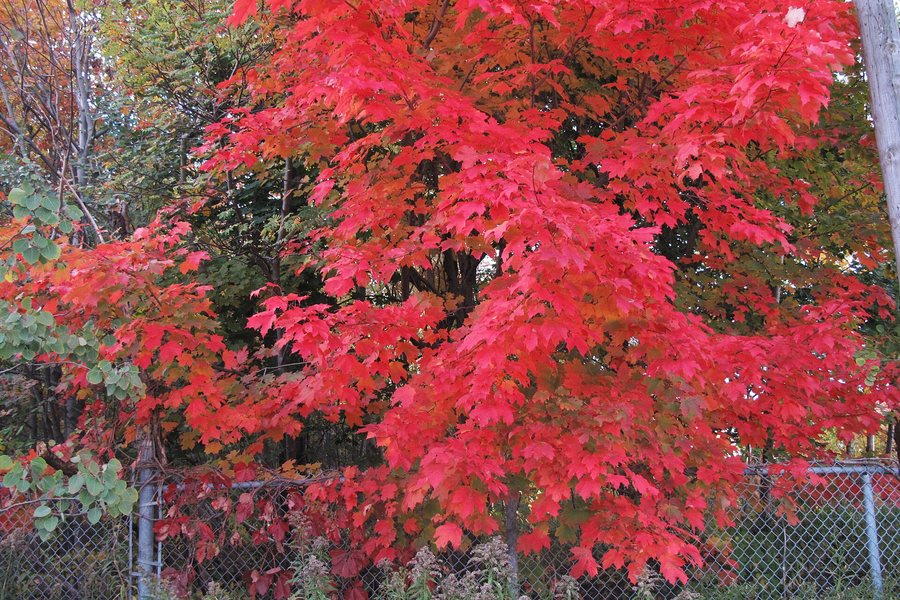
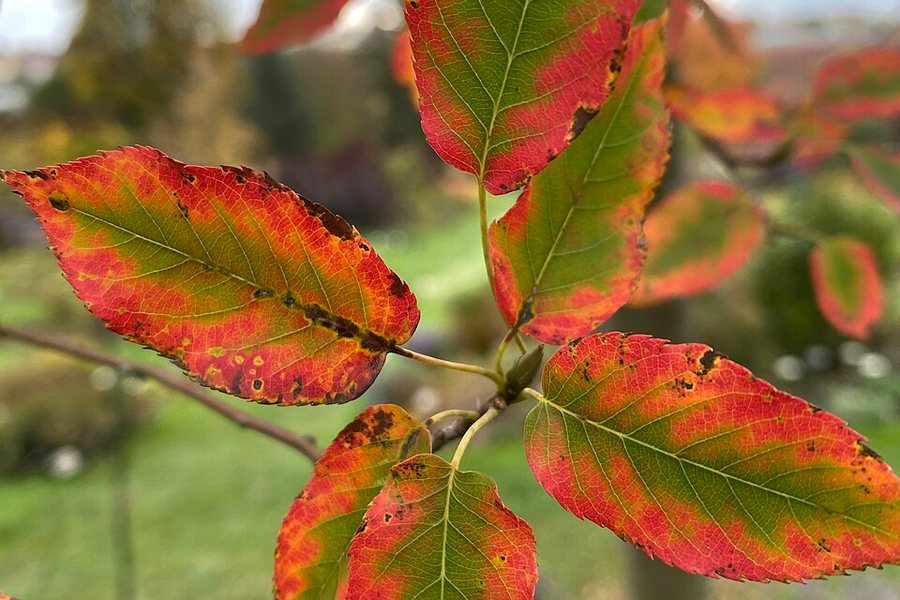
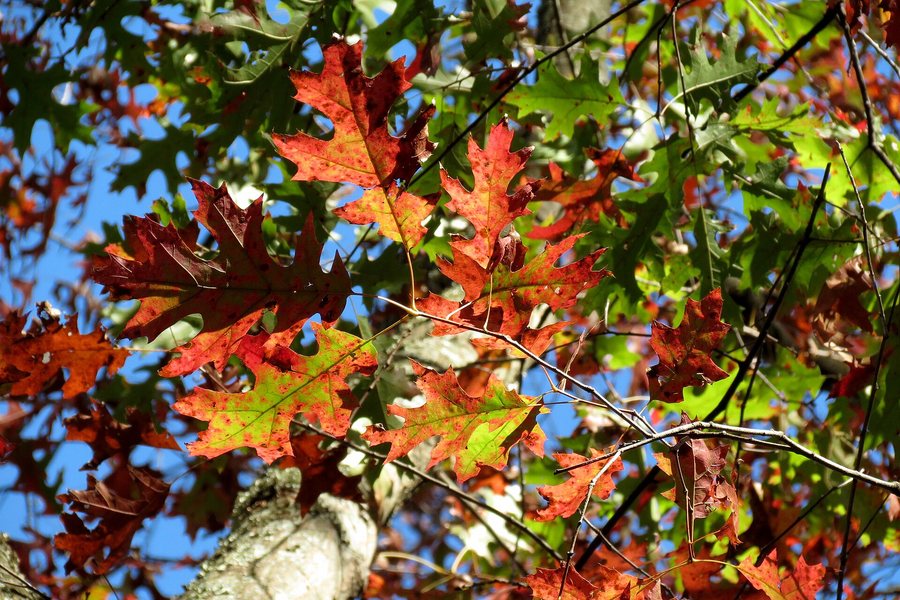
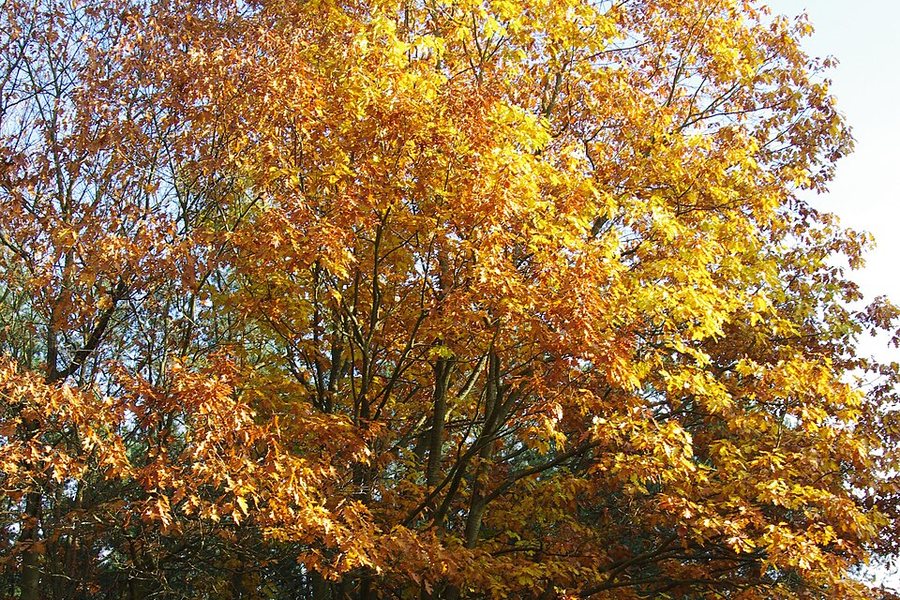
Flowering dogwood. Deep red to maroon, with glossy red berries. One of the very first to color.
Sourwood. Scarlet to deep maroon, often with peach and orange mixed in. A plateau favorite, and early.
Blackgum. Brilliant scarlet, sometimes with orange and purple. Among the first trees to color.
Sumacs. Red, orange and purple along road cuts and sunny edges. Some of the earliest color of all.
Red maple. The wild card: red, orange or yellow, and each tree picks its own. Some color in September, others wait for late October.
Serviceberry. Red and yellow together on the same small tree.
Scarlet oak. True red, and the best color among the oaks. Late.
Northern red oak. Russet red to brown. Late.
Orange
Warm middle tones, strongest in the cool coves and on higher ground.
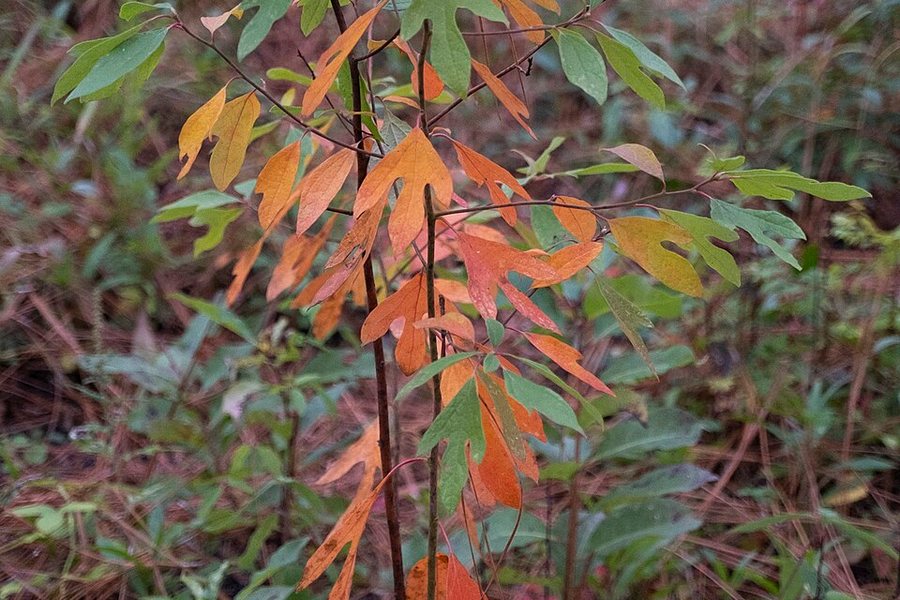
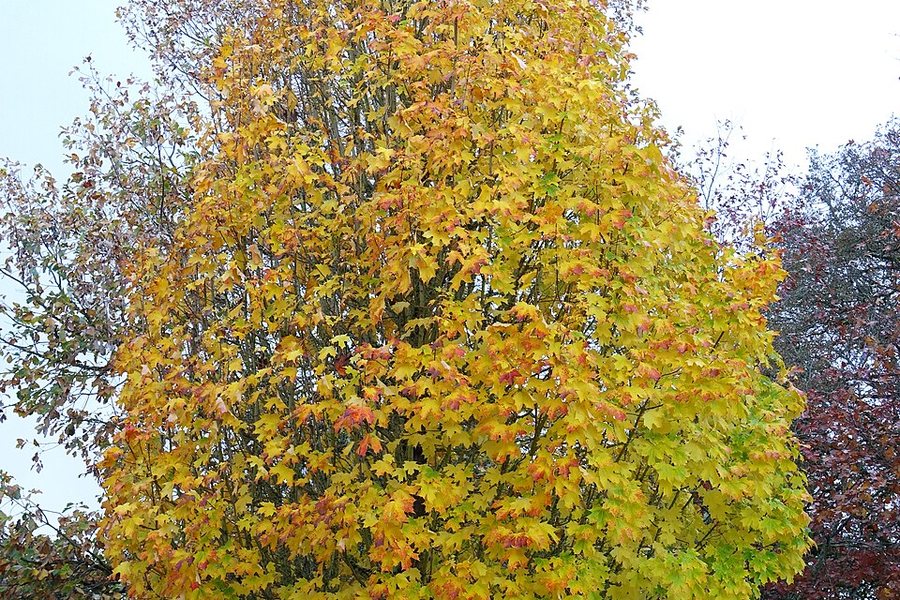
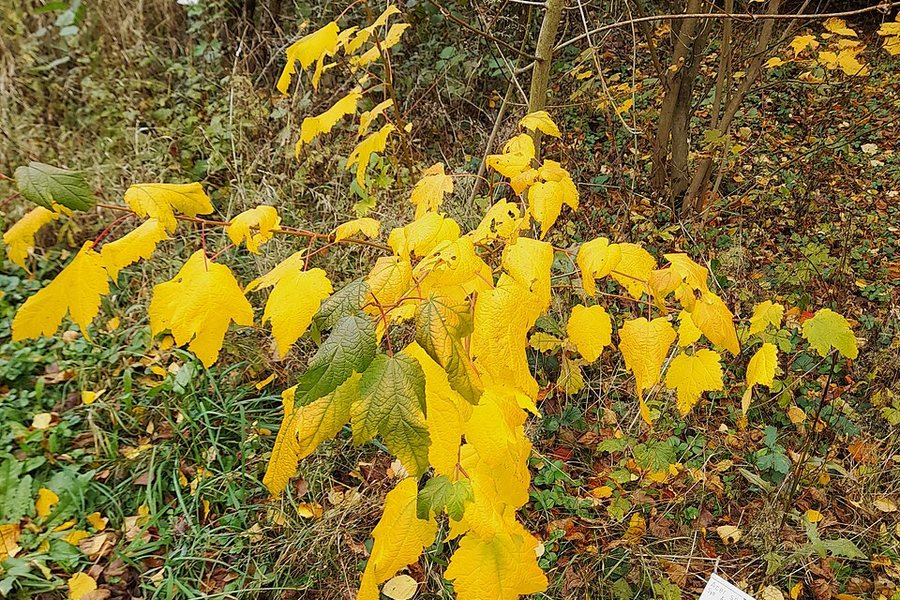
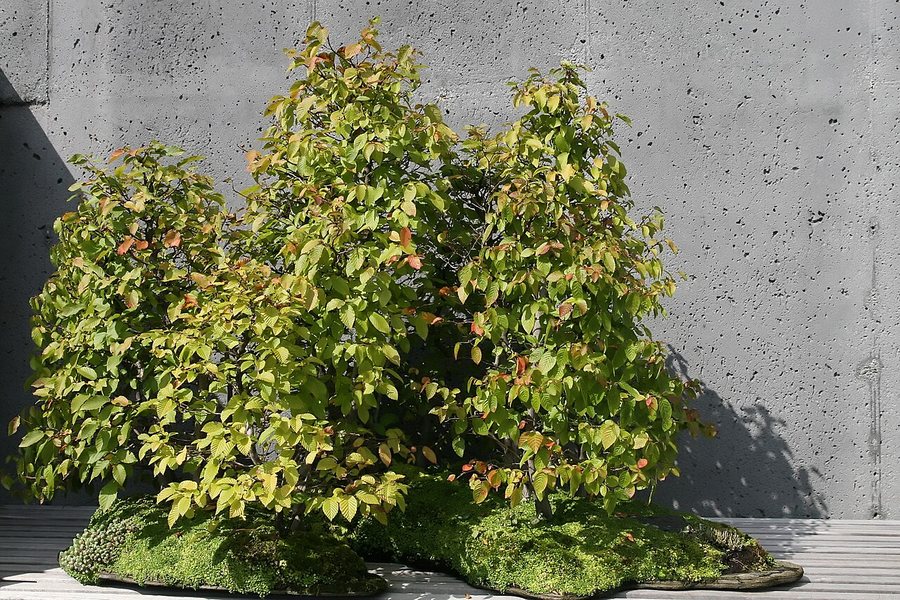
Sassafras. Orange, yellow and red on leaves shaped like mittens. Look for all three on one branch.
Sugar maple. Orange to red and yellow. Scattered on the plateau, mostly at higher, cooler spots.
Mountain maple. Orange to red, a small understory maple of cool coves.
American hornbeam. Orange to red on a small streamside tree with smooth gray bark.
Gold and Yellow
The broadest wash of color on the plateau, filling the hillsides through early and mid October.
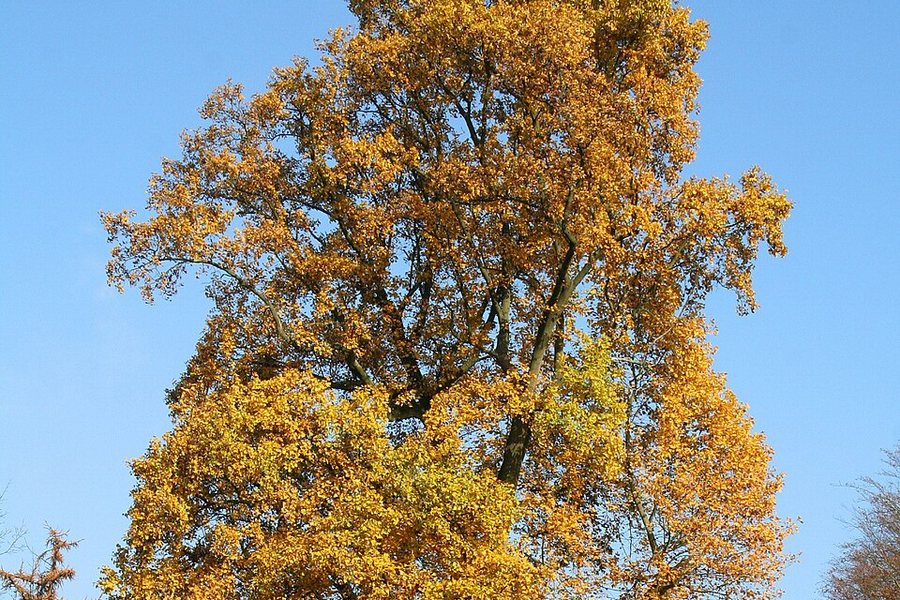
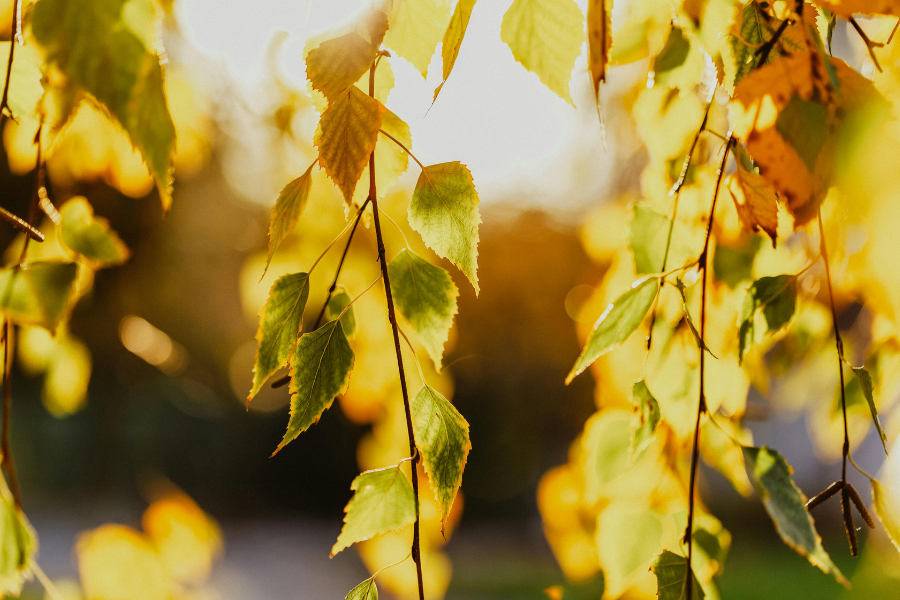
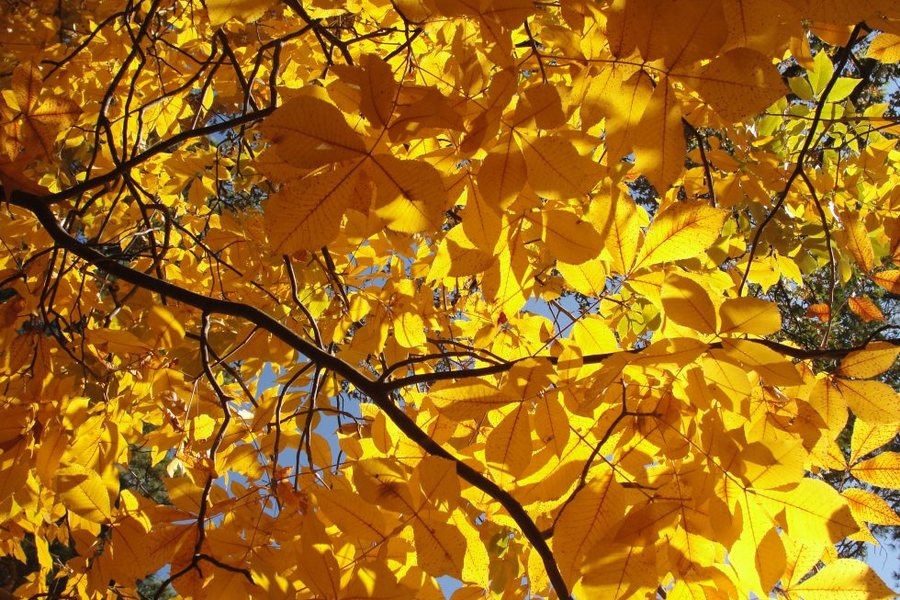
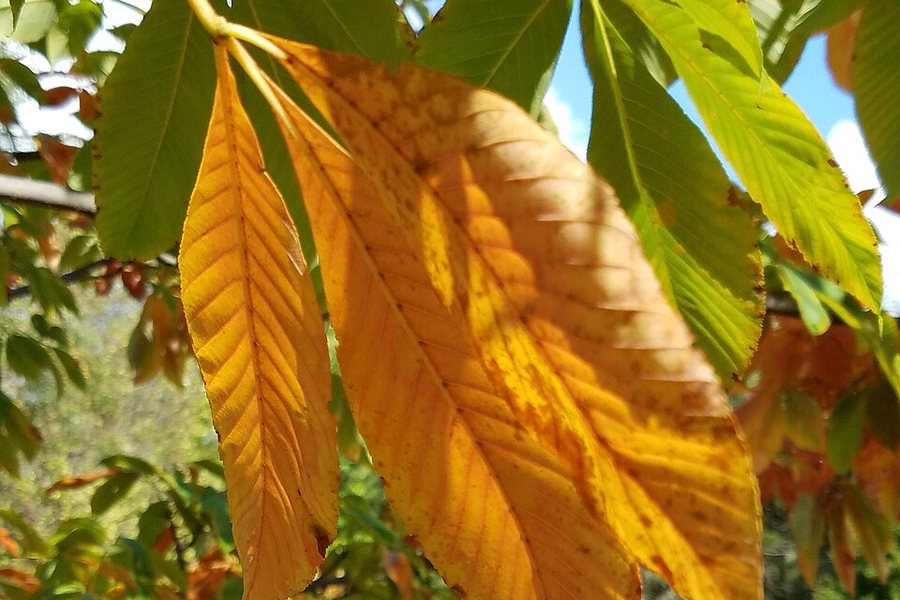
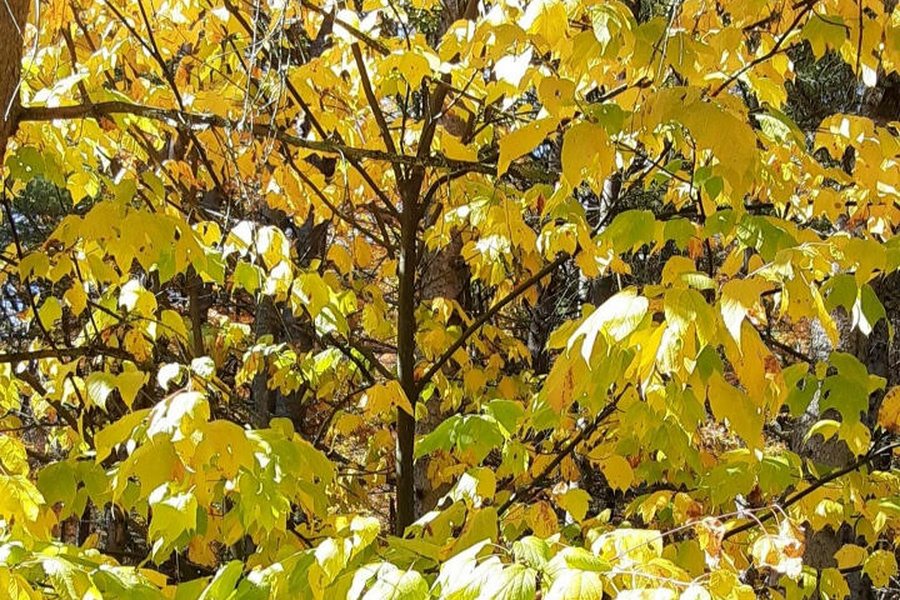
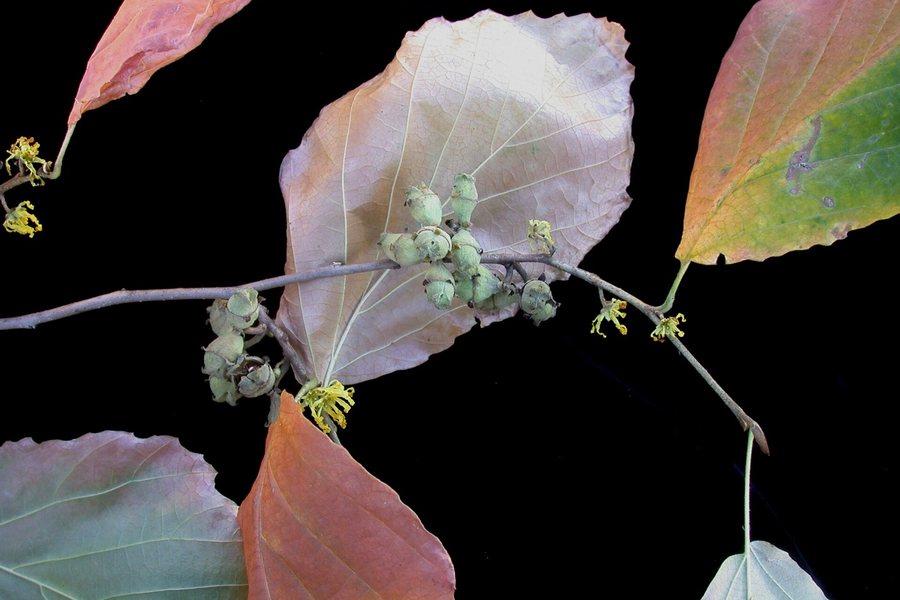
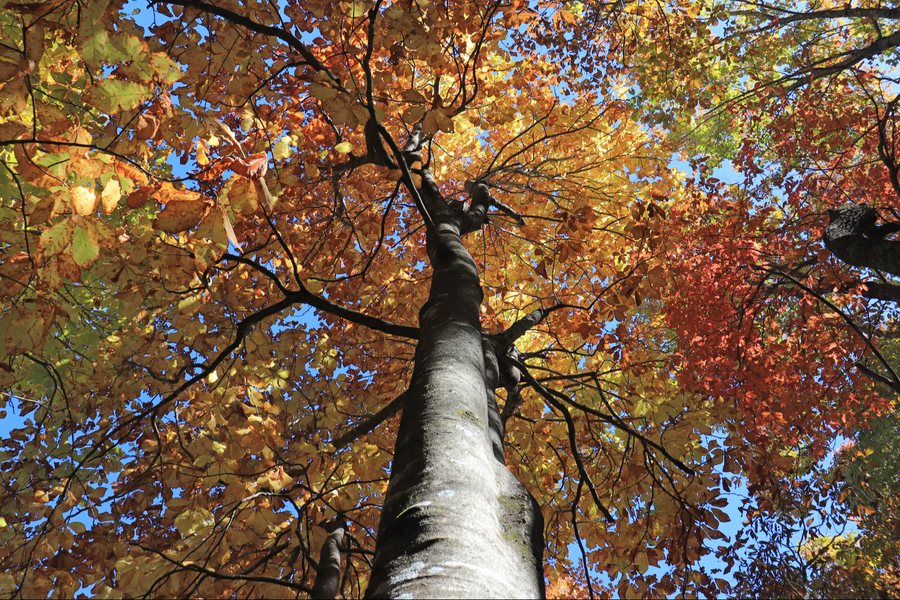
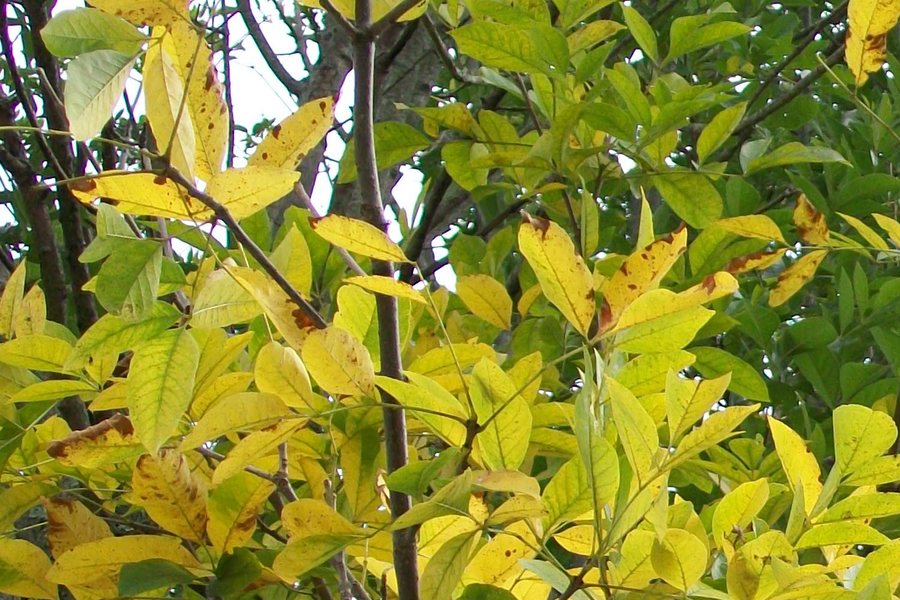
Tulip poplar. Butter yellow, high in the canopy. Stressed trees yellow and drop early in dry years.
Yellow and sweet birch. Clear yellow. Birches are among the first to color at higher elevations.
Hickories. Rich golden yellow: mockernut, pignut, bitternut and shagbark.
Yellow buckeye. Yellow to orange, and one of the earliest to color and drop in the coves.
Striped maple. Pale, lemony yellow, on a slender tree with green and white striped bark.
Witch hazel. Yellow leaves, then yellow ribbon flowers in October and November as a bonus.
Fraser magnolia. Yellow to tan on very large leaves. Cucumber tree follows suit.
White ash. Purple and yellow, an unusual pairing worth looking up for. Black cherry adds yellow with touches of red.
Russet and Bronze
The last word of the season, on the dry ridges and into November.
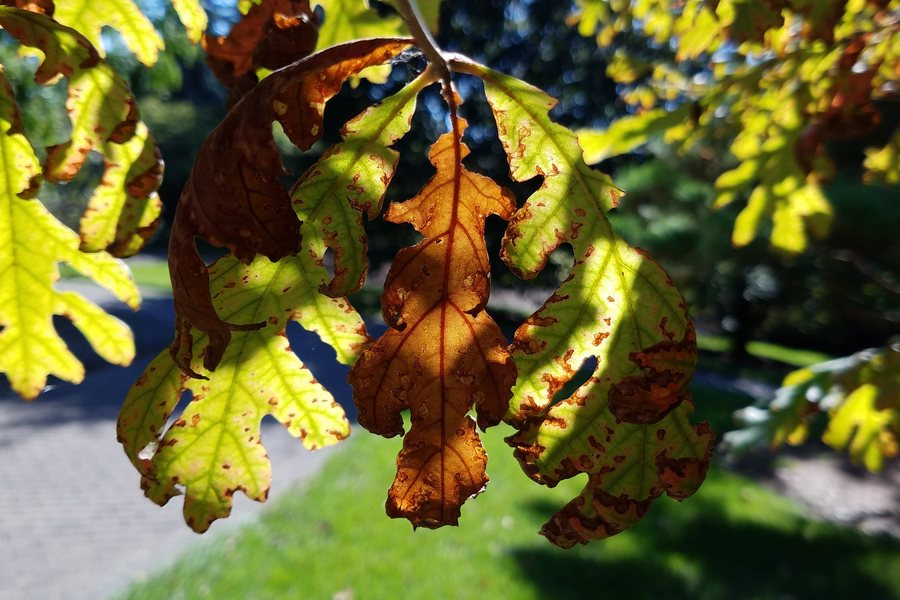
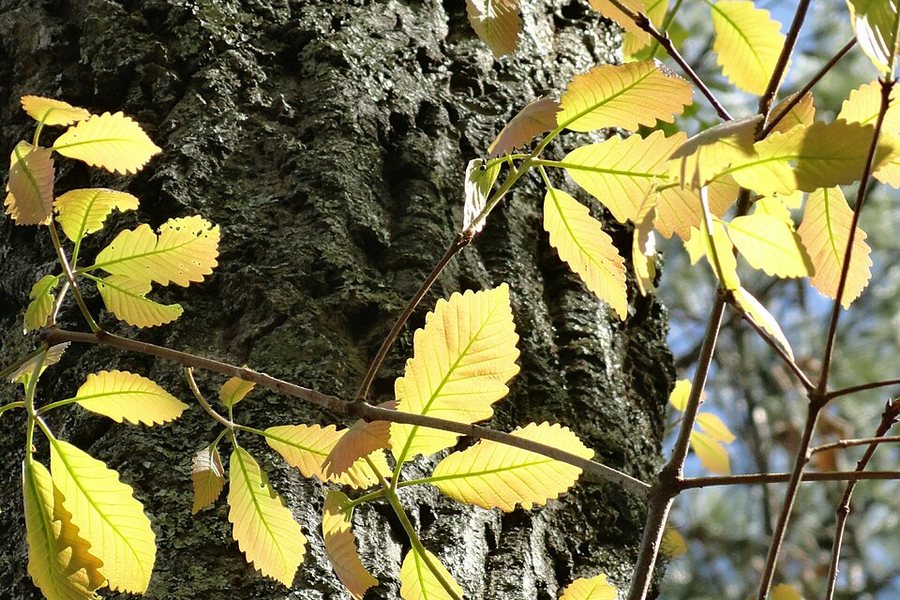
White oak. Wine red to brown. One of the last to color.
Chestnut oak. Yellow to brown, on the dry ridges.
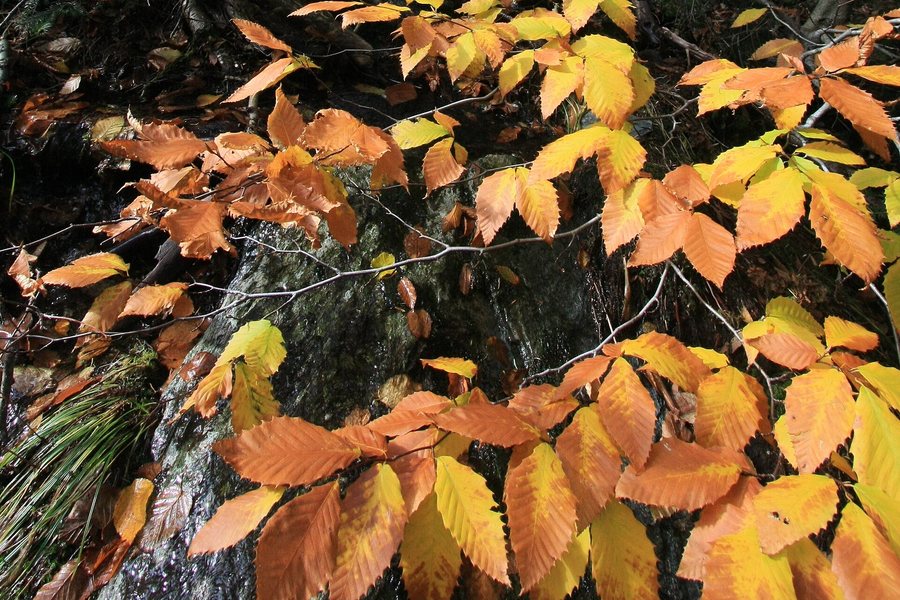
American beech. Golden bronze. Beech often holds its papery leaves through winter.
The Evergreen Frame
Eastern and Carolina hemlock, white pine, rhododendron and mountain laurel never change. Their deep green is what makes the reds read so clearly from an overlook.
Where to Look
Start high and work your way down as October goes on.
Whiteside Mountain. The first place on the plateau to color, with birch and maple on the upper slopes.
Sunset Rock in Ravenel Park. A short walk from Main Street to a view over town.
Horse Cove Road. Thirty-seven curves under a hardwood canopy, coloring after the ridges.
Cullasaja River Gorge and Dry Falls. Lower and later, with waterfalls framed in gold.
Rhodes Big View Overlook. Wide valley views and, in autumn, the Shadow of the Bear on Whiteside.
On peak weekends, it pays to reserve your room and dinner table early. Plan your October weekend while the plateau is still green.