
In Highlands, the natural world is more than scenery. It provides materials, color, texture, and inspiration. Artists shape wood from local forests, press blooms into paint, weave branches into sculpture, and use light to reveal every vein in a leaf. Their mediums and methods vary, but each artist shares a close connection to the plateau and its native materials. By working directly with the Southern Appalachian landscape, these artists create pieces that are unmistakably tied to Highlands.
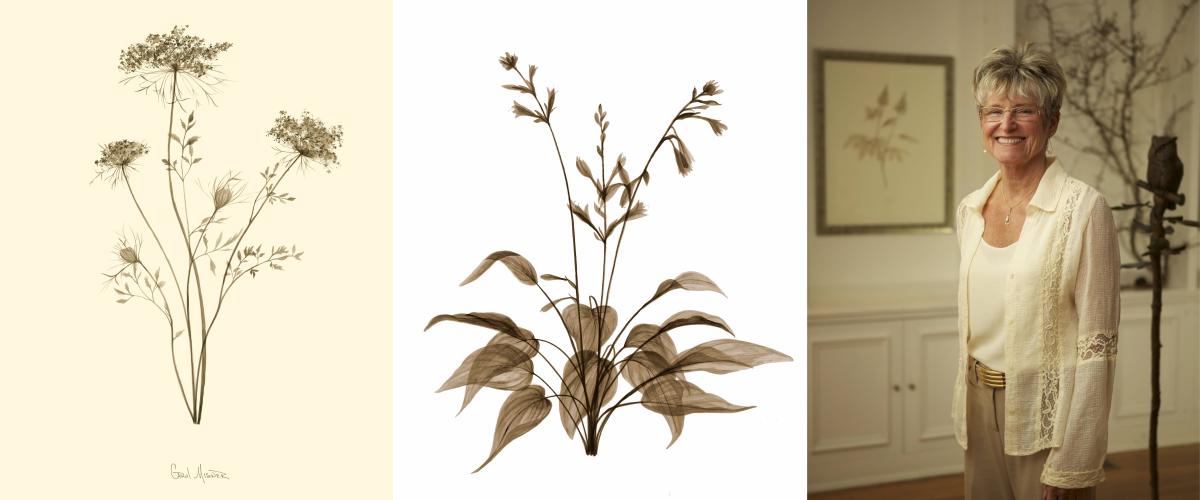
Carol Misner’s botanical paintings are instantly recognizable for their monochromatic palette, intricate detail, and delicate transparency. By building layers of acrylic, she creates floral forms that appear to float against the surface. Viewers often compare the luminous effect to an X-ray rendered in watercolor.
From her Highlands studio, Misner paints plants familiar to local gardens and woodland paths. Her subjects include native, oakleaf, and lacecap hydrangeas, wild azaleas visited by butterflies, joe-pye weed along stream banks, dogwood blossoms, Solomon’s seal, trillium, dwarf iris, foam flower, and the many ferns found across the forest floor.
Since moving to Highlands in 2015, Misner’s work has found its way into homes on the plateau and beyond. Blackberry Farm in Tennessee has commissioned numerous works featuring Highlands flora. Her paintings have also been offered through Acorns, while her botanical notecards have been available at the Business Spot. Each notecard identifies the featured plant, continuing Misner’s interest in helping viewers recognize the species they encounter around Highlands.
For Misner, each work begins with observation. “I want people to be able to identify what they’re looking at and feel that connection to the land here.”
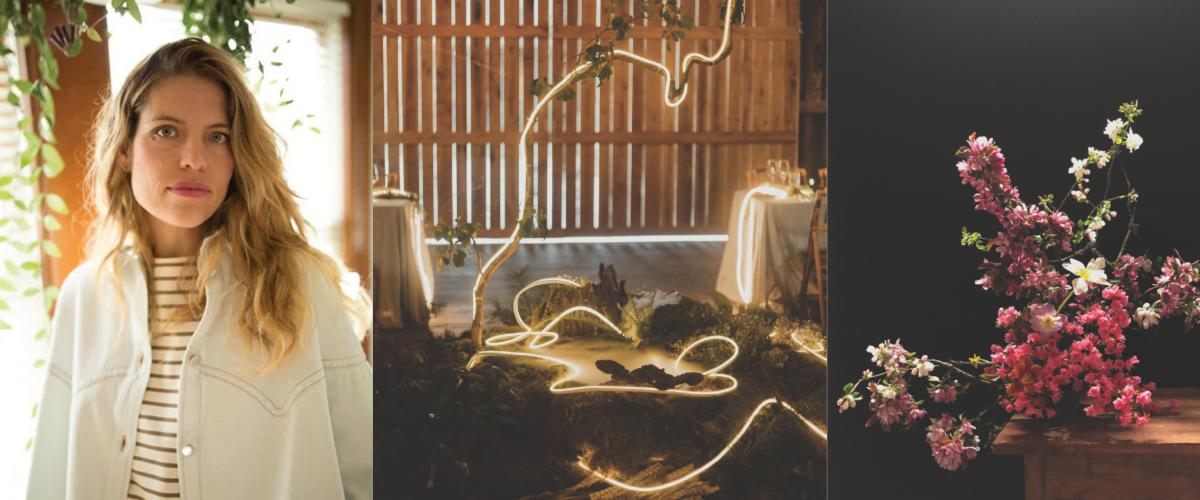
Christy Curcuru brings a painter’s eye and a designer’s sensibility to her work with flowers and botanicals. A graduate of the Rhode Island School of Design in painting and sculpture, she creates arrangements and installations using foraged materials and locally grown blooms.
Her projects often begin with what is available on the plateau. Glossy greenery and scarlet berries may become holiday decorations at Highlander Mountain House. Branches and lichen may form wreaths, while homegrown tomatoes, begonias, and other seasonal materials may appear in event tablescapes at Ruffed Grouse.
Curcuru describes her style as “Ojai, California meets Appalachia,” pairing a relaxed, organic appearance with careful technical planning. She is also an accomplished visual artist whose botanical paintings combine familiar Highlands plants with rare orchid species in imagined compositions. Trillium, rhododendron, hydrangea, jack-in-the-pulpit, dahlias, and ferns appear alongside animals and unfamiliar flora, forming scenes that resemble fantastical bouquets.
Teaching is another important part of her work. Through classes at the Highlands Biological Station, The Bascom, and Flat Mountain Farm, she shows participants how to work with locally available materials. Some sessions combine floral design and painting, allowing participants to explore both practices together.
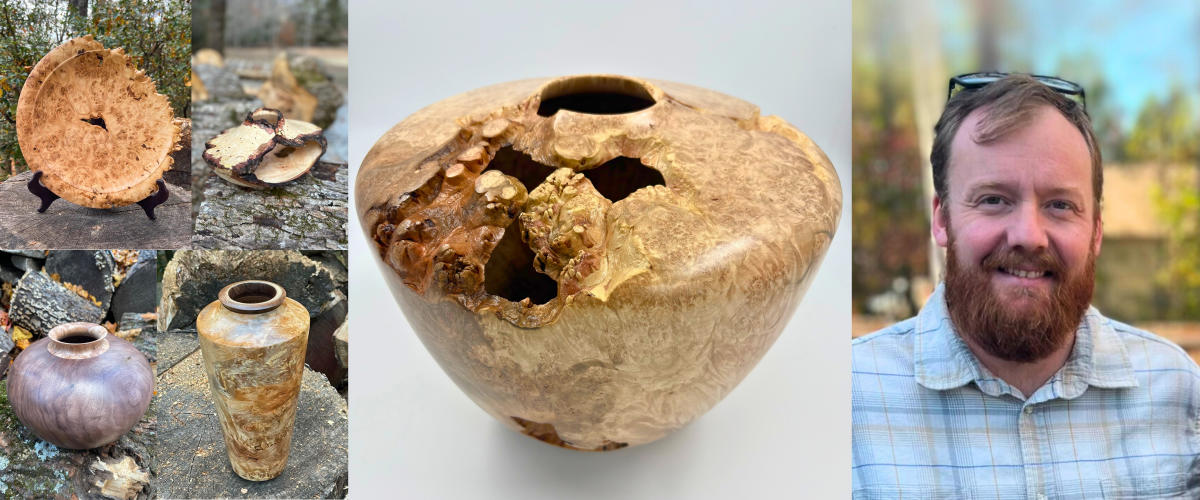
For Madison Minus, every piece of wood holds a secret. A Highlands native who has lived in Vietnam, Thailand, and Australia, taught scuba diving, snowboarded in Colorado, and worked as a commercial diver in Florida, Minus eventually returned home to focus on carpentry and woodturning.
From his garage studio, he turns locally sourced hardwoods such as maple, cherry, and black walnut into bowls, hollow forms, bottle stoppers, and necklaces. His favorite material is burl wood, valued for its unpredictable grain patterns. “It’s like Christmas every time I put a piece on the lathe,” he says. “You never know what’s inside until you start turning it.”
His process begins with freshly cut wood. Minus rough-turns each piece into shape, coats it with a wax-like sealant, and allows it to dry slowly while monitoring its moisture loss by weight. Once the wood is fully dry, he returns it to the lathe for final shaping and finishing.
His completed work ranges from small wearable pieces to large bowls and sculptural hollow forms, with burl wood appearing throughout much of his collection. His work may be found at The Bascom, where he also serves as facilities manager.
Although their mediums differ, these artists share an appreciation for Highlands’ native materials and the ways the landscape influences their work. Visitors can experience more of the area’s visual arts through local galleries, studios, exhibitions, classes, and community arts organizations. Explore current exhibitions, programs, and artist opportunities at The Bascom, or browse more arts and culture experiences available throughout Highlands.