
A Hidden World in Highlands
Here in Highlands, rainy nights feel alive. Sweep a flashlight along the ground or down a trail and you may meet one of our most remarkable nocturnal neighbors: the salamander. These abundant creatures are amphibians, soft-skinned and moisture-loving, and are often confused with reptiles such as lizards, which have dry, scaly skin.
The southern Appalachian Mountains are widely known as the “Salamander Capital of the World,” and Highlands sits near the heart of that hotspot. Great Smoky Mountains National Park alone hosts more than 30 species, while North Carolina boasts more than 60 salamander species, more than any other U.S. state. For a region of our size, that is an extraordinary concentration by global standards.
Why So Many Thrive Here
Our mountains stack climates like books on a shelf: climb a thousand feet here and it is like traveling hundreds of miles north. Steep gorges hold cool, wet air; forests spread a thick blanket of leaf litter, fallen logs, and rocks; and clean, fast streams lace the slopes. In short, Highlands offers the cool, shaded, well-watered conditions salamanders crave, while also supporting the invertebrates on which they feast.
So many species of salamanders living within close range of each other have also evolved to specialize in different microhabitats and body sizes, reducing competition and predation. Small, medium, and large species, varying between terrestrial, semi-aquatic, and aquatic, allow communities to coexist.
Meet the Salamanders of Highlands
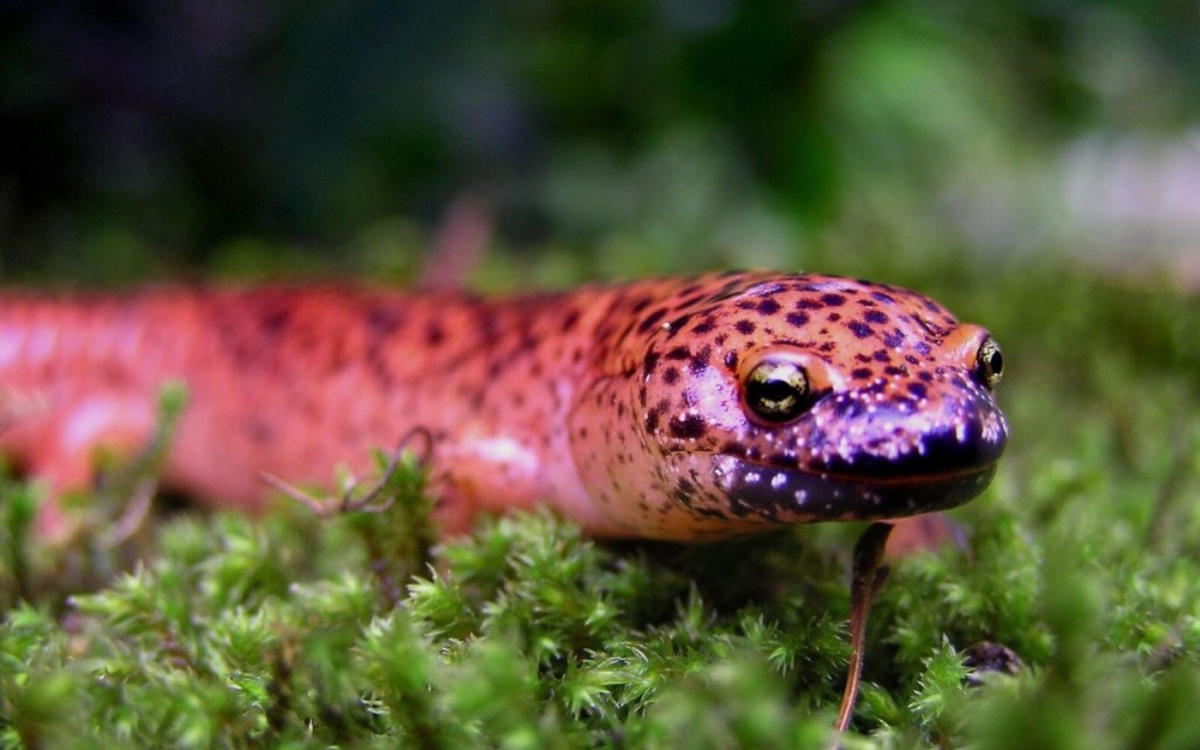
Most of the salamanders found here are lungless salamanders, in the family Plethodontidae, which require consistently moist environments to “breathe” through their skin. Grey-cheeked and red salamanders inhabit the forest floor, while Blue Ridge two-lined salamanders can be found in and around streams of any size.
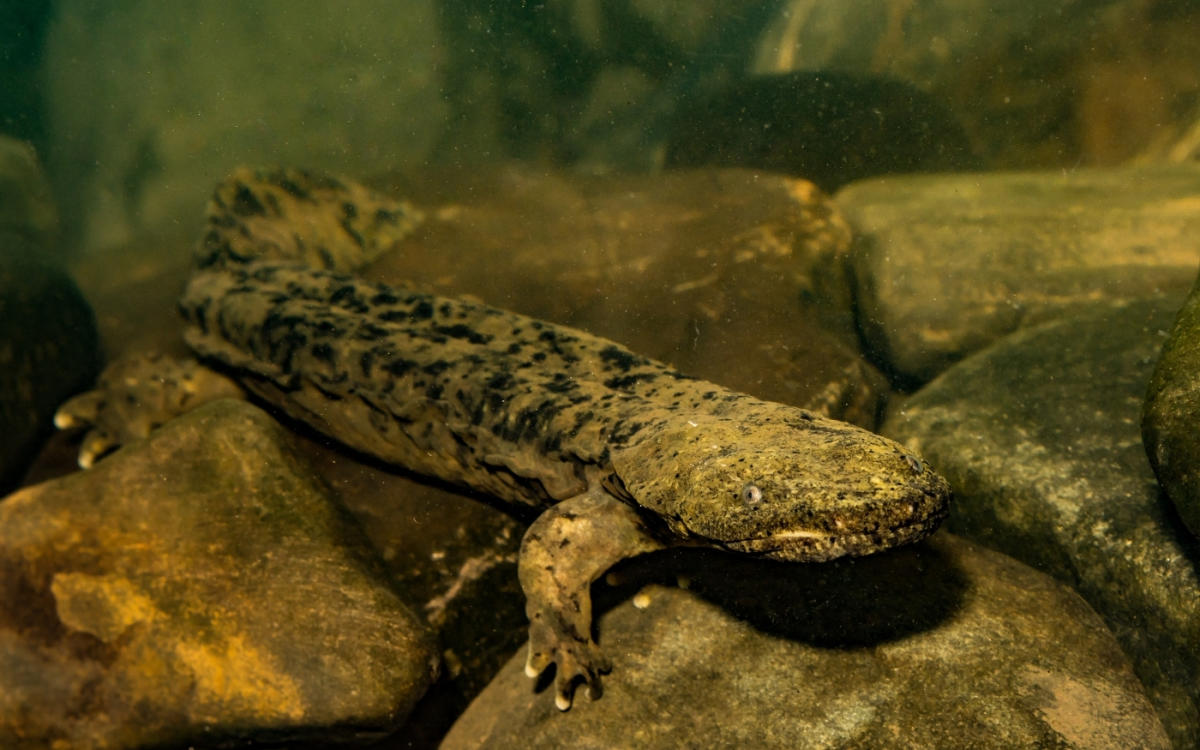
A favorite in our region is the spotted salamander, with its large black body speckled with yellow or orange spots. And, of course, where rivers run big and boulder-strewn, the giant of them all dwells: the eastern hellbender.
The Story of the Hellbender
These critters have not had it easy. In September 2024, Hurricane Helene devastated many of Western North Carolina’s residents and left deep scars across the landscape. Floods scoured riverbeds and, in many places, rolled or buried the flat, dinner-plate rocks that hellbenders use as nesting dens. In the rushed cleanup that followed, heavy equipment removed debris and natural woody cover, further simplifying stream habitat and threatening sensitive species.
These impacts landed right in the middle of breeding season, on top of long-term threats such as sedimentation, water-quality declines, and habitat fragmentation that led the U.S. Fish and Wildlife Service to propose listing the eastern hellbender as endangered throughout its entire range in 2024.
Why all the fuss about hellbenders? They are living fossils, North America’s largest salamanders, growing over two feet long, and they only thrive in cold, clean, well-oxygenated water beneath big, stable rocks. When floods or heavy equipment shift the stones, or when silt fills the cracks between them, hellbenders disappear. Protecting them protects whole river systems.
Learn More in Highlands
Want to learn more and meet a few slimy salamanders?
Join the Highlands Nature Center’s recurring “Salamander Meander” programs, family-friendly guided night strolls to look for salamanders and learn why our region and these tiny amphibians are so special. Herpsofnc.org is a great resource for learning about the variety of salamanders in North Carolina.
And when you are out on local trails or along streams, enjoy these animals with your eyes and camera, leaving everything exactly as you found it. Small choices, like staying on paths and resisting the urge to “redecorate” streambeds with stacked rocks, add up to big wins for our most secretive neighbors, including hellbenders, that use them for shelter and nests.