
For a town you can cross on foot in fifteen minutes, Highlands holds an unusual amount of art. That is not an accident of the present. Painters and makers have been climbing to this plateau for well over a century, drawn by the same things that draw everyone: the light after rain, the cool of four thousand feet in July, the green that runs to the edge of every view.
The town was barely a town when they started coming. Highlands was hewn from the wild in 1875, laid out by men who believed a settlement this high would reward the people willing to build it. The artists were not far behind. They found what they came for up here, and a good many of them never left.
They found what they came for up here, and a good many of them never left.
The last art weekend of summer
Every summer, twice, that long tradition gathers itself into a single park. The Mountaintop Art and Craft Show sets around 120 makers under white tents at Kelsey-Hutchinson Founders Park, and the August gathering, the 29th and 30th this year, is the last of the season before the leaves turn. A Highlands artist named Cynthia Strain began the show more than twenty years ago and held the standard high, and it has stayed that way.
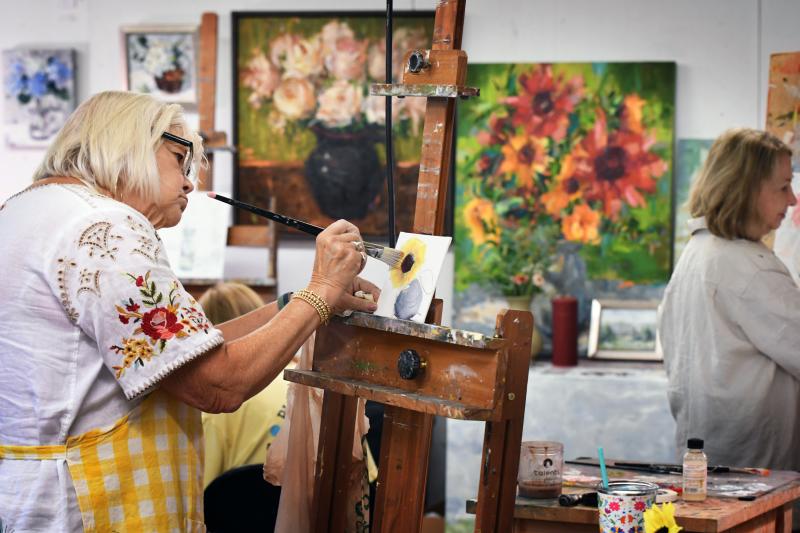
Walk the rows and you will find paintings and photography, pottery pulled on the wheel, blown glass, worked wood, weaving, and jewelry, most of it made by the hands you are shaking. Admission is free, there is music on the stage, and every dollar dropped at the gate goes to children's programs here on the plateau. Highlands-Mountaintop Rotary runs it as the year's largest fundraiser, so the piece you carry home leaves a little behind it.
All year, there is The Bascom
If your visit falls between the two shows, Highlands keeps a home for its art open the year round, and it is a rare one.
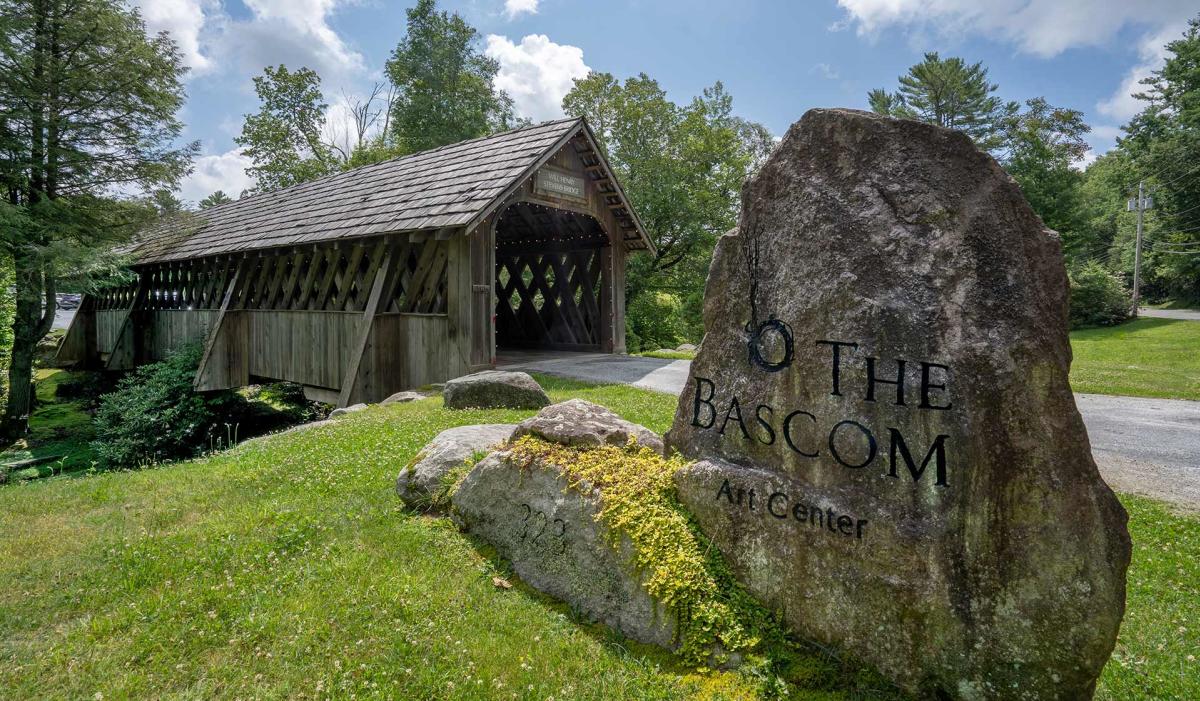
The Bascom stands on six wooded acres just off Main Street, reached across an eighty-seven-foot covered bridge with a story of its own. The Will Henry Stevens bridge is more than two hundred years old, built in New Hampshire, taken down, and raised again here in 2009 without a single nail of metal, held together by wooden pegs the way it always was. It is named for a painter who taught in Highlands a century ago, and it is, by its age, the oldest covered bridge in North Carolina. You cross it to reach the art, which feels about right.
Inside, three galleries turn over close to ten exhibitions a year, the work of artists who live within sight of the peaks hung beside names carried in from far away. Outside, a sculpture and nature trail winds past native plantings to a small waterfall of its own. In the ceramic studio, a potter works the wheel while you watch. None of it costs a thing to enter.
And you need not leave empty-handed. The Bascom shop carries the original work of more than 150 makers a year, true pieces from regional hands, pottery to painting to fine craft, with the proceeds going straight to the artist who made them. There are few more direct ways to give something back to the community that lends this town so much of its character.
The Bascom is the heart of it, but not the whole. A short walk turns up others, each with its own leaning. Dead Artists Gallery, in Wright Square on Main Street, trades in the vintage and the antique, oils and watercolors by painters long gone, under a name too good to forget: bringing new life to dead artists. Art Highlands Gallery runs the other direction, contemporary work by living artists from here and abroad, and on the right evening you can watch one of them draw before your eyes. And in the photography of Michele Schwartz, whose Divine Landscapes range from a bead of dew on a spring blossom to a mountaintop at first light, you get the plateau itself, seen by someone who rises before the sun to catch it.
No accident
A covered-bridge art campus, a juried show that draws thousands, painters at their easels along the waterfalls: a town does not come by these things by chance. Highlands settled long ago that art was worth the keeping, well before a mountain town was expected to feel that way, and the proof is everywhere the eye lands. In the park. Along Main Street. Behind the gallery glass. On the walls of the people who call this plateau home.
Come up for a weekend and you will see it. Take a piece home and you become part of the story.